Background
Alongside her media work, Robin returned to formal study, completing a Master’s degree in Film, Video, and New Media, followed by post-master’s study in artistic research.
During this period, her practice developed into a hybrid form that combined visual and performance art, investigative inquiry, and sustained spiritual practice. She understood this work as a meeting point between different ways of knowing — artistic, journalistic, and contemplative.
Performances and installations
Lost in Transcendence
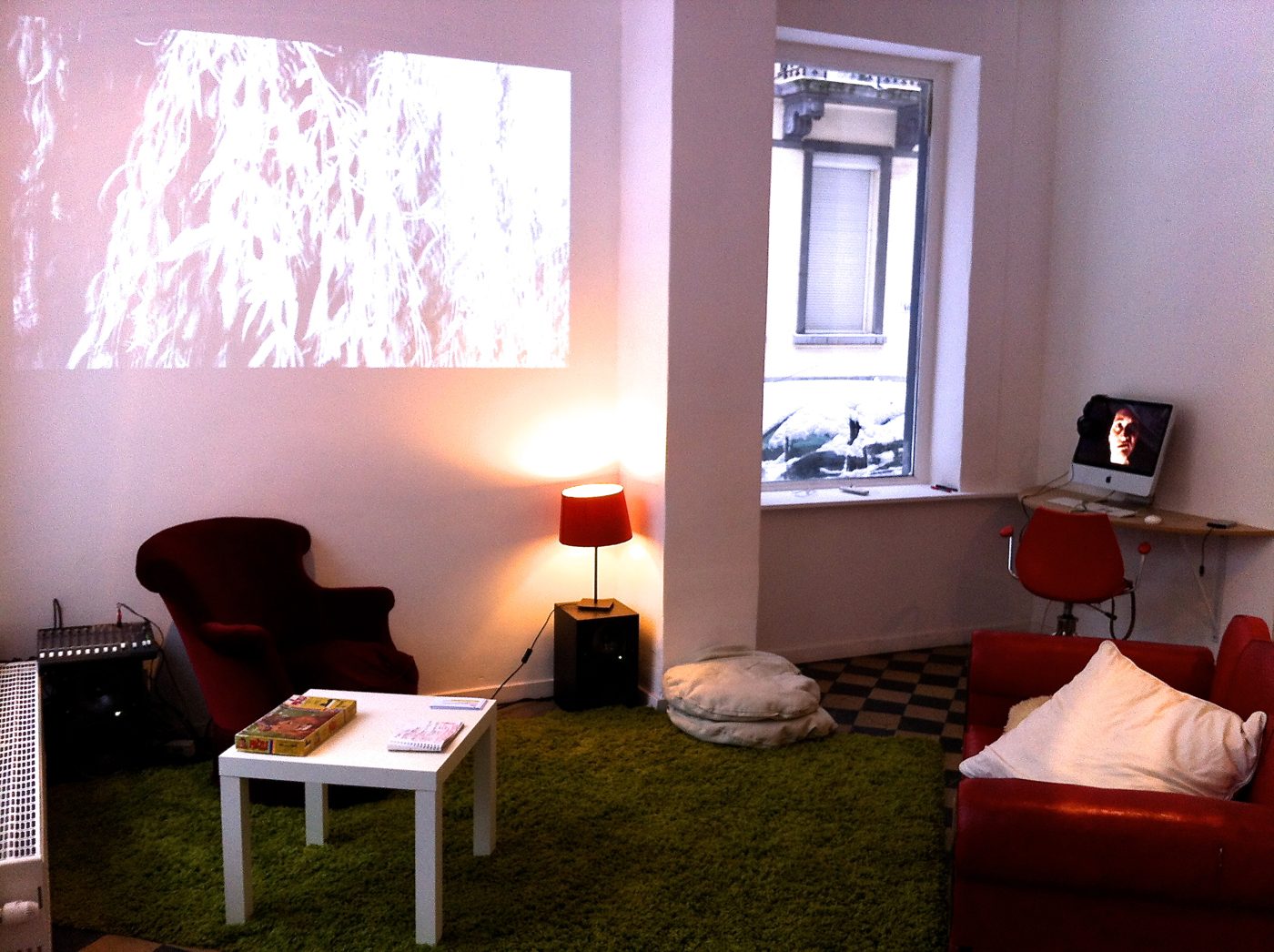
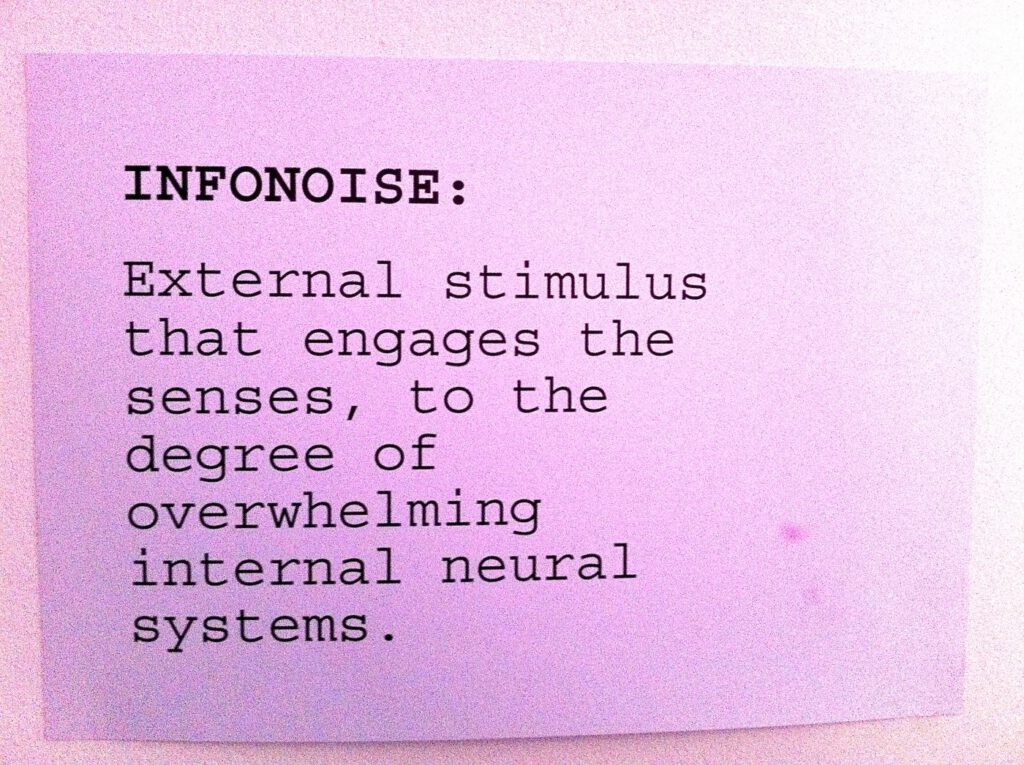
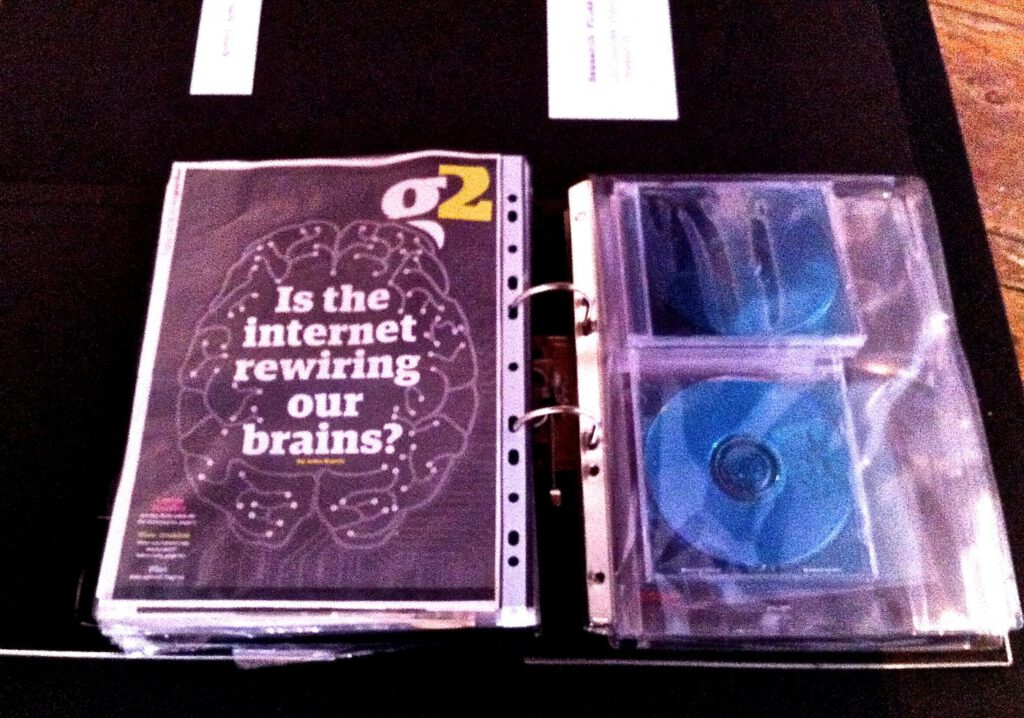
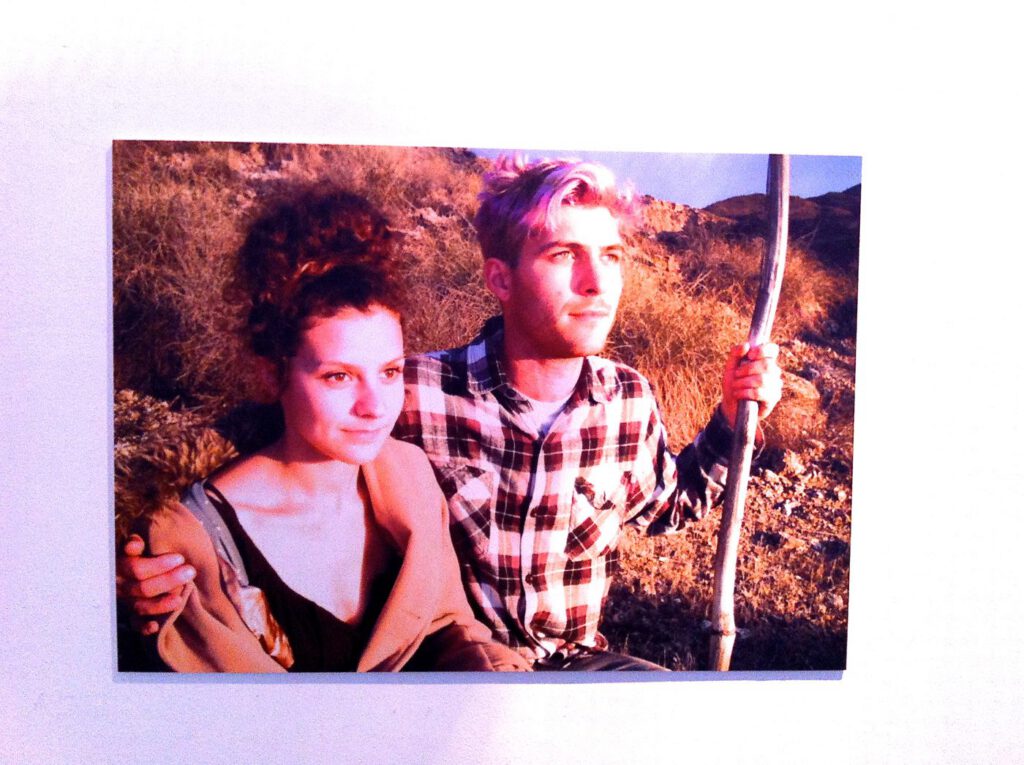
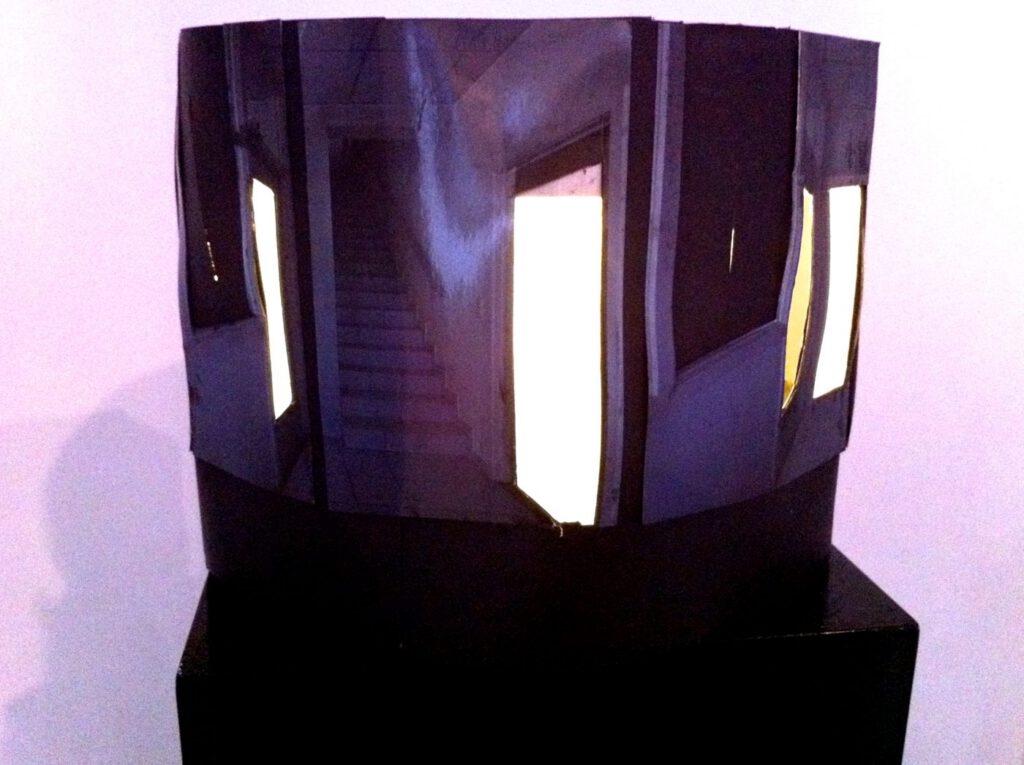
Robin Amanda spent a year researching the boundaries between our negotiated reality and a narrative landscape called “the last silence”. In Lost in Transcendence she presents an exhibition of artifacts collected from these journeys.
The exhibition
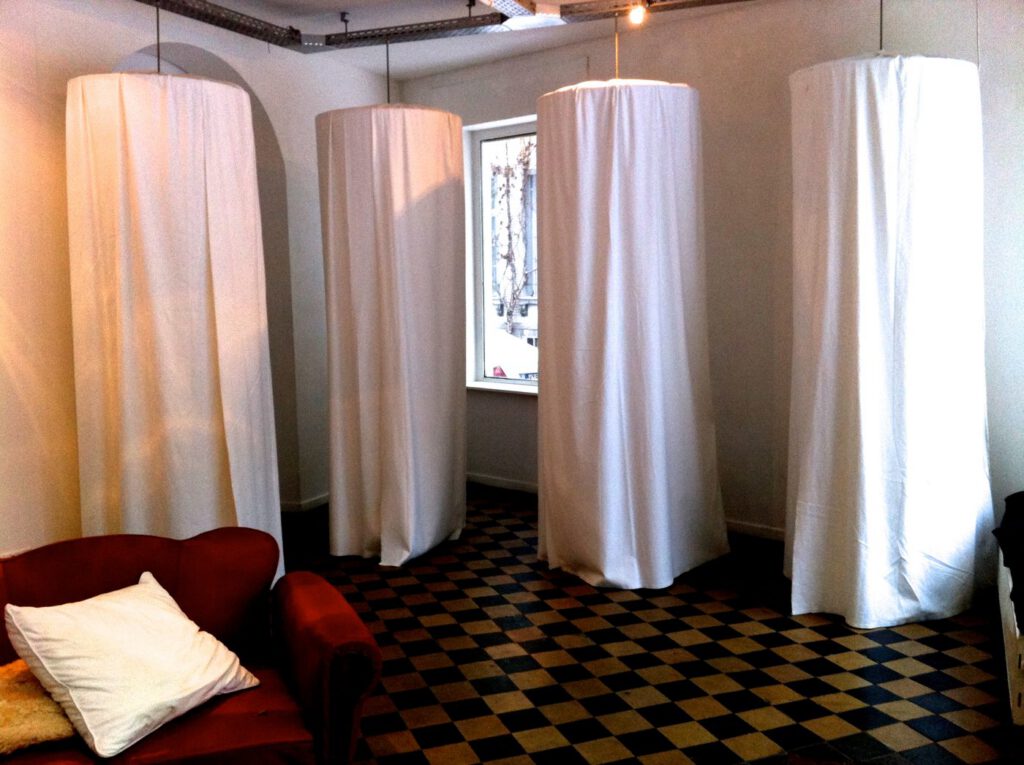
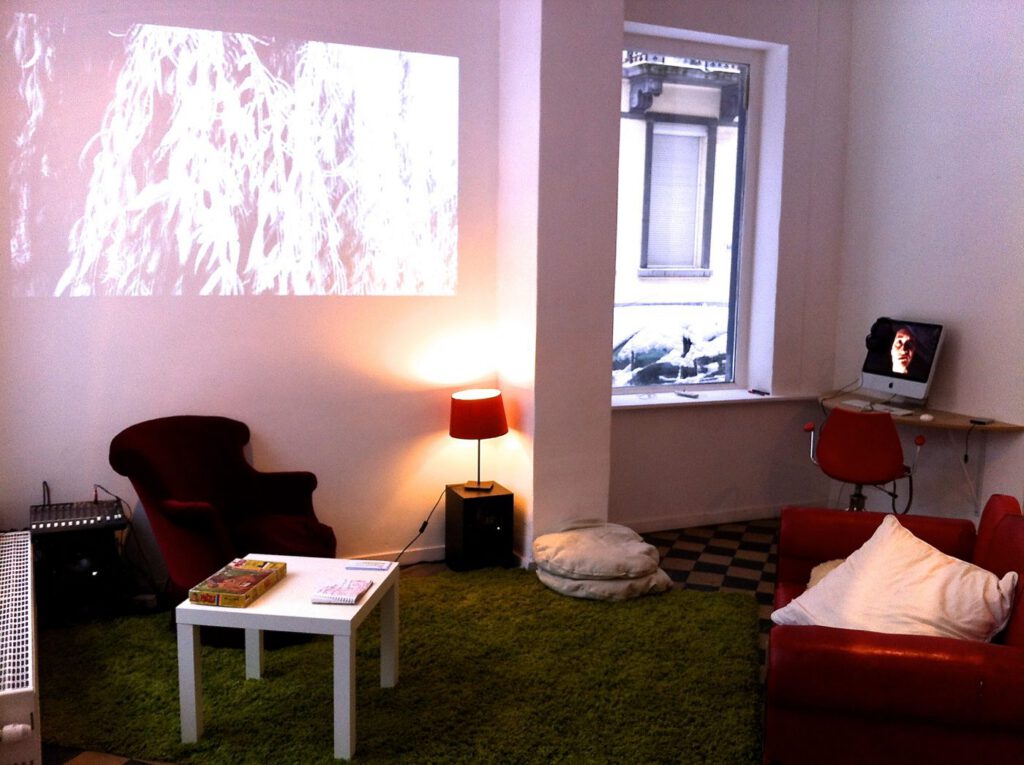
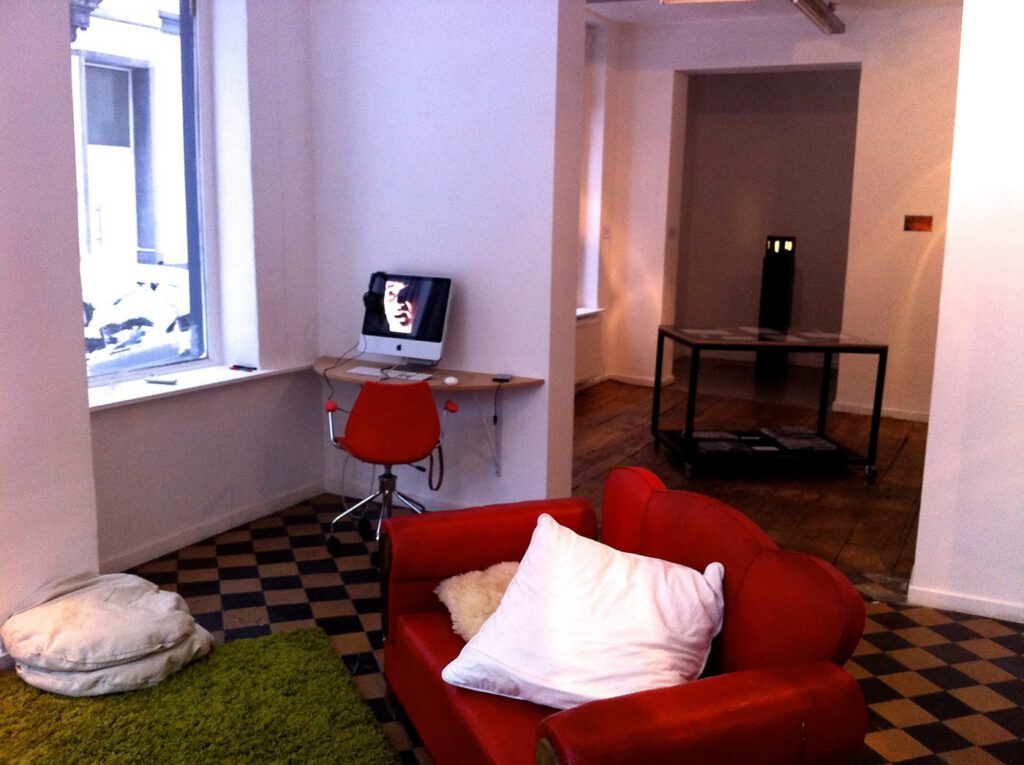
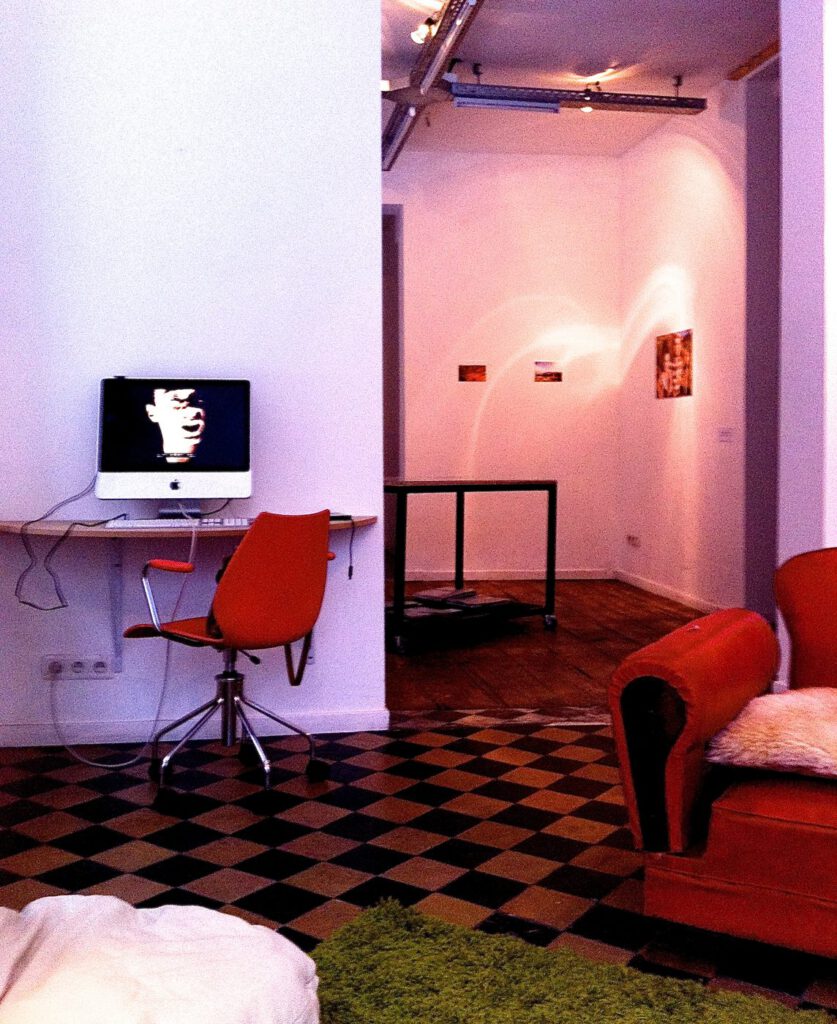
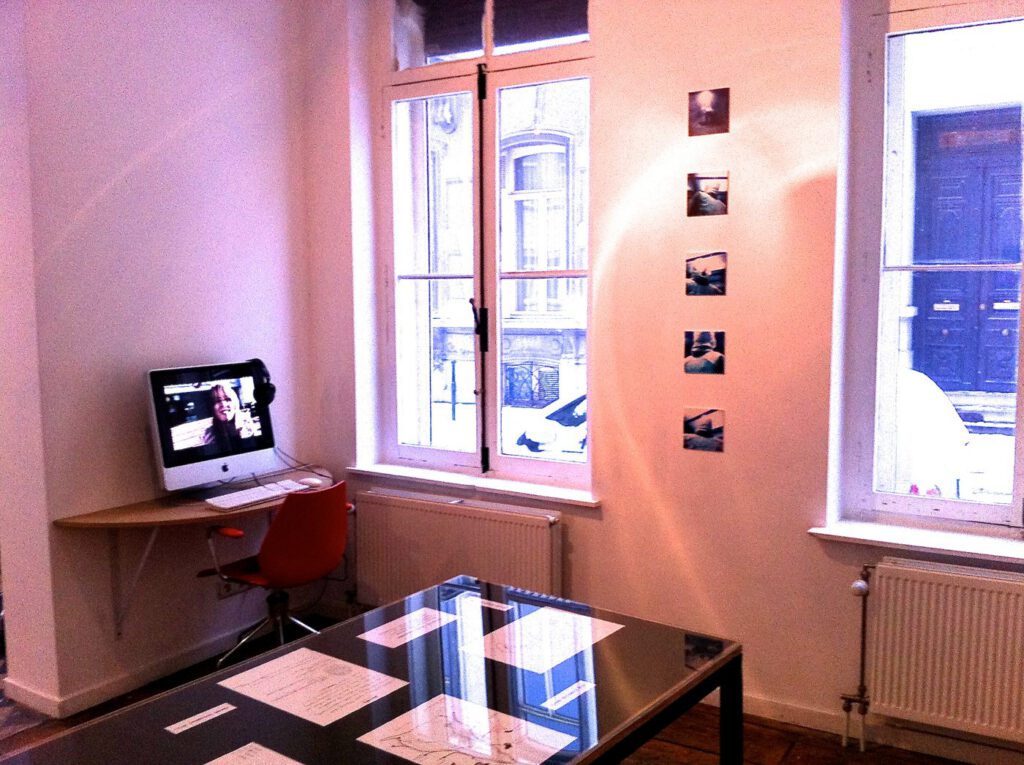
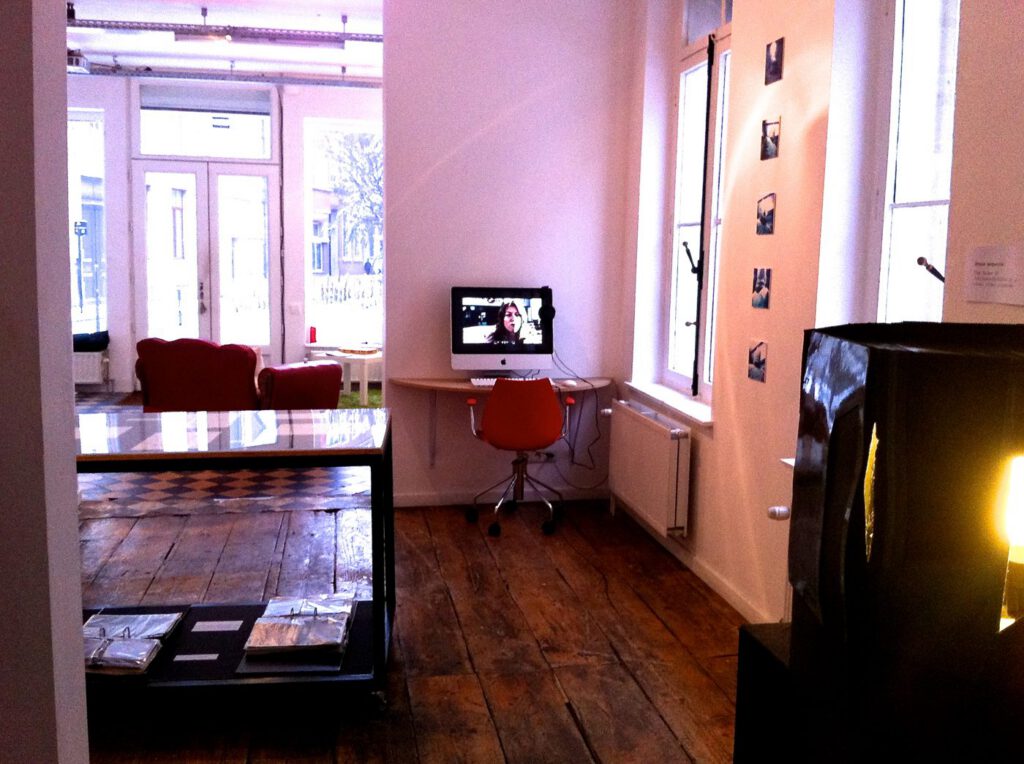
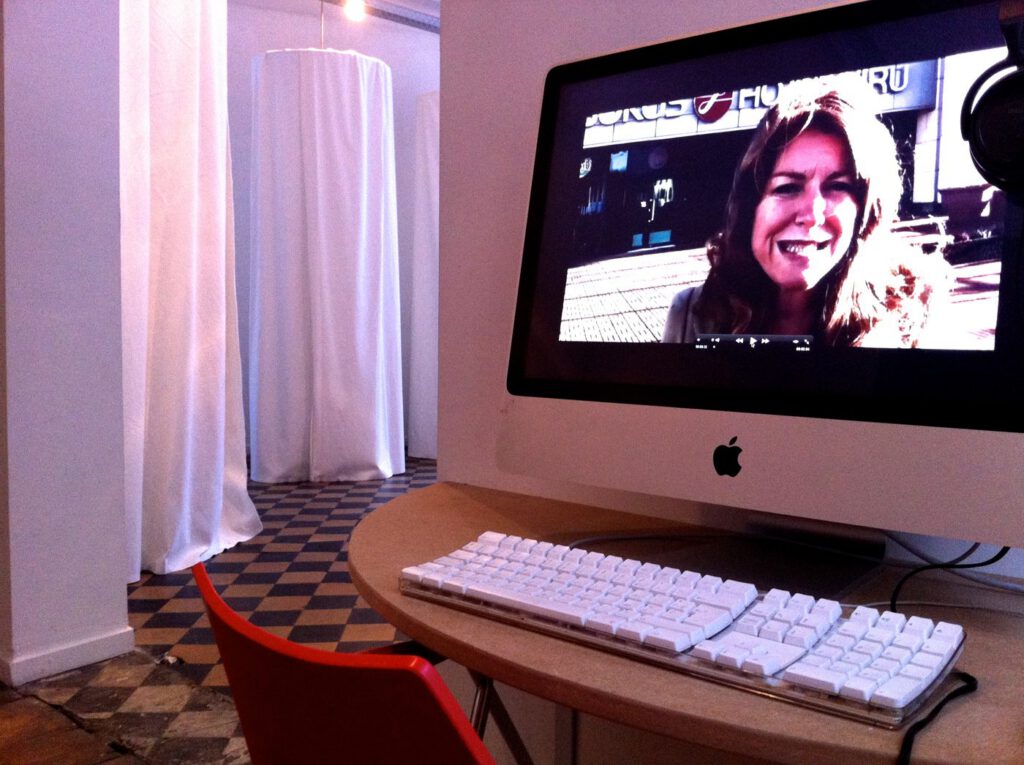
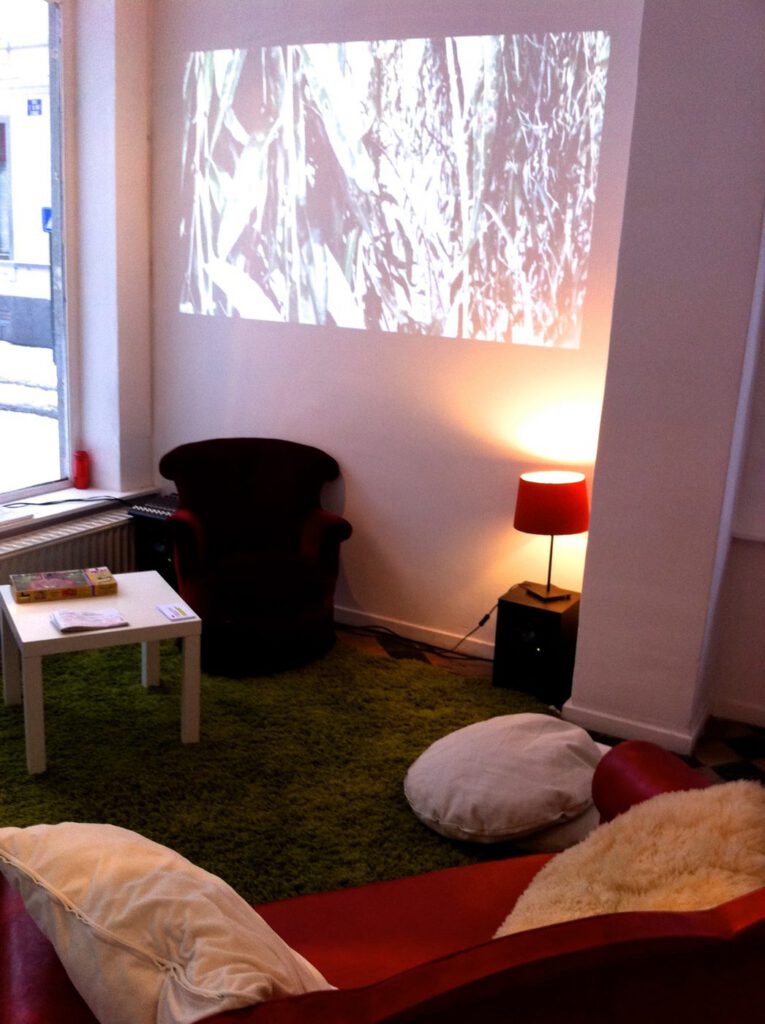
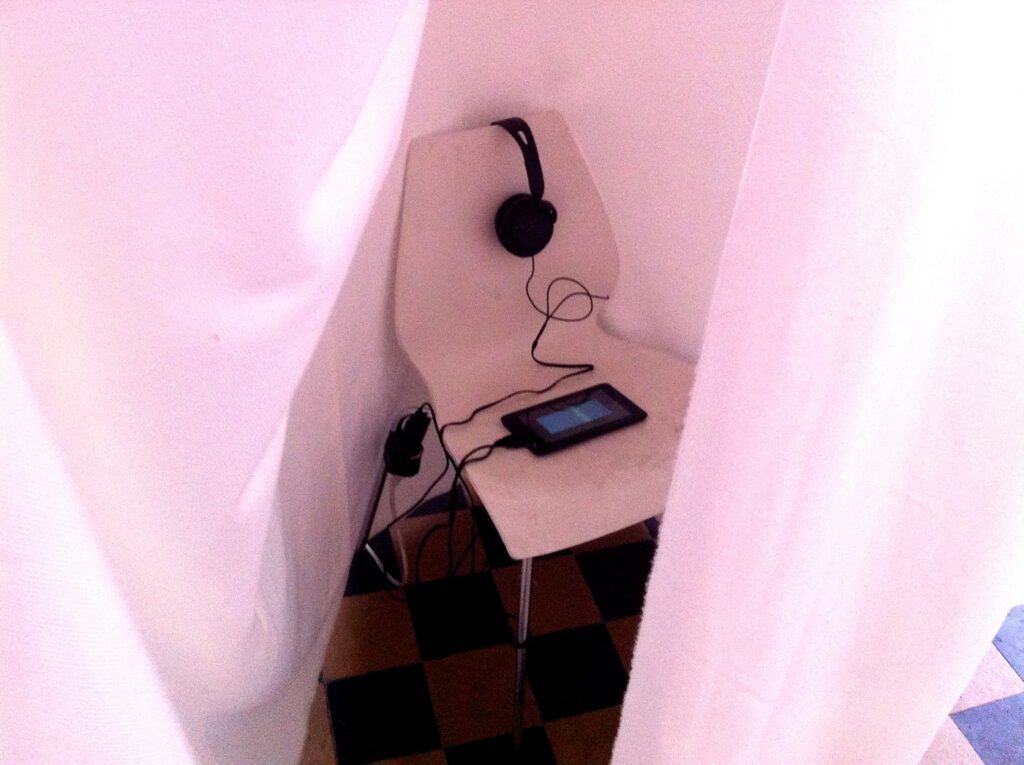
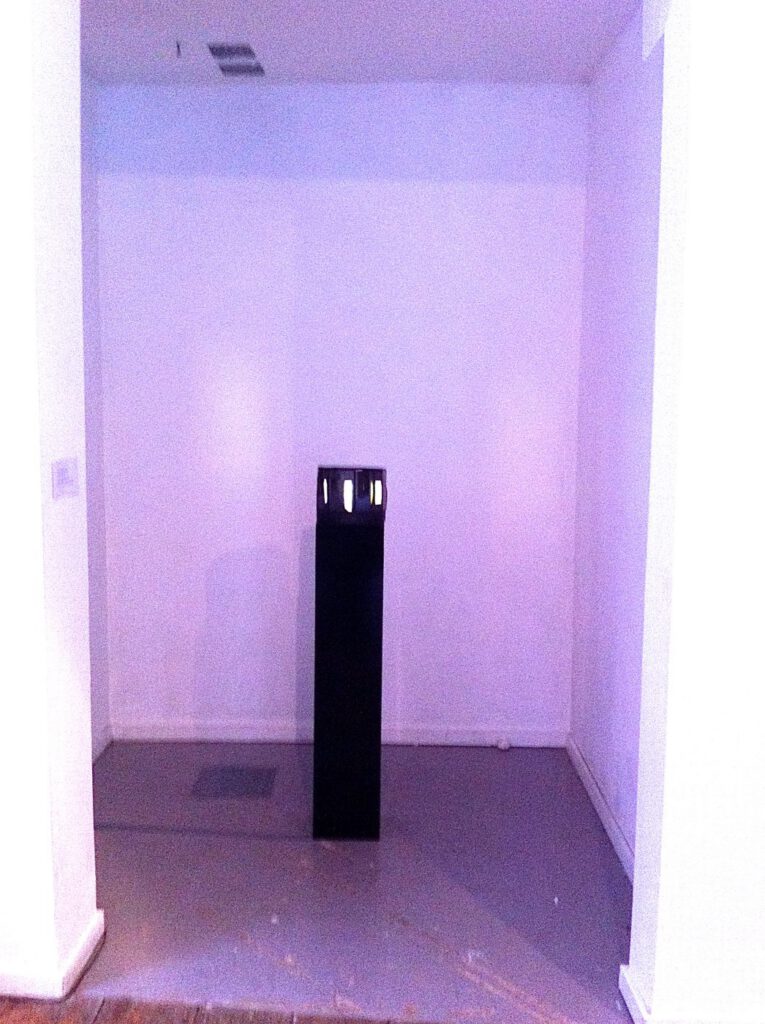
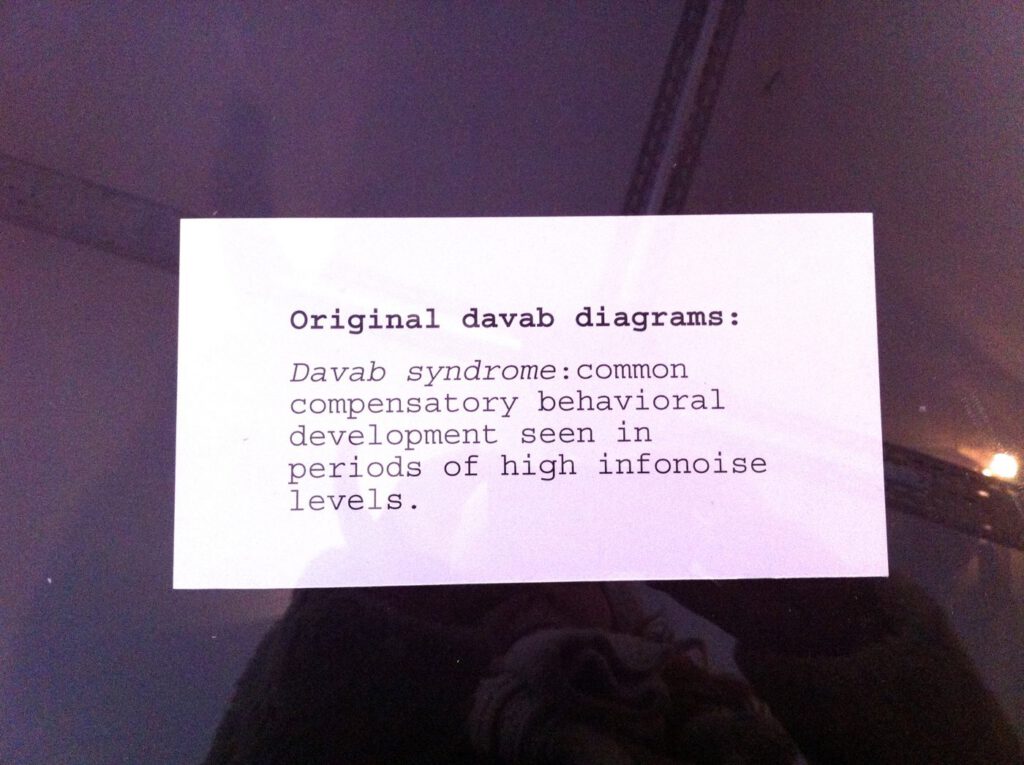
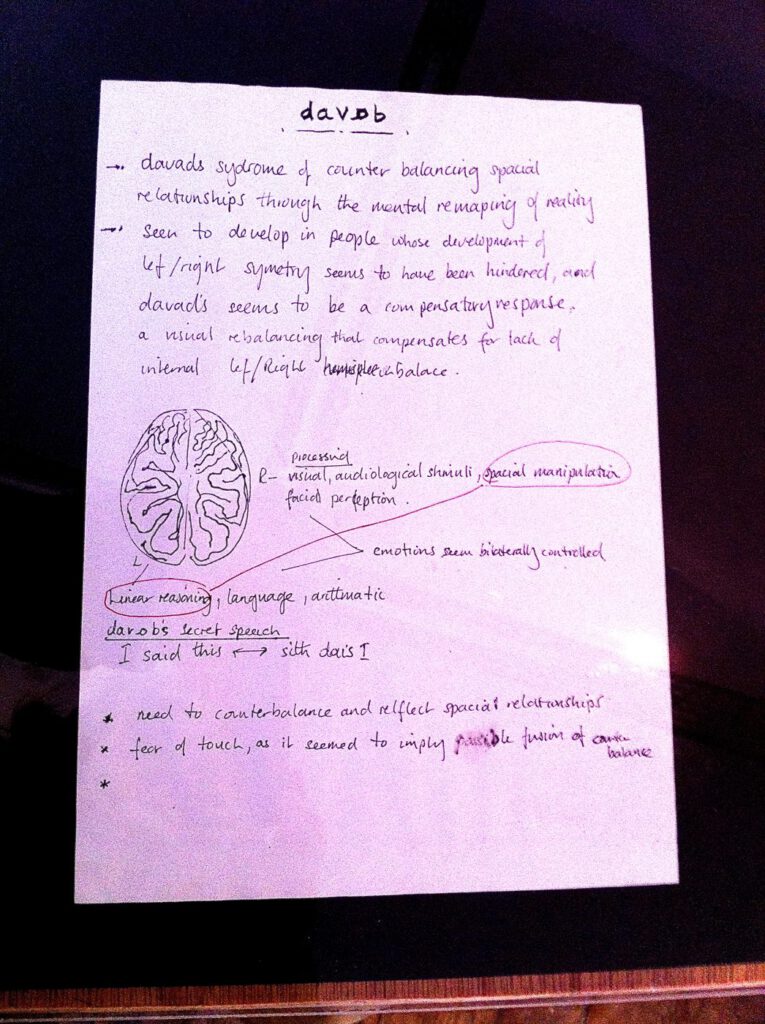
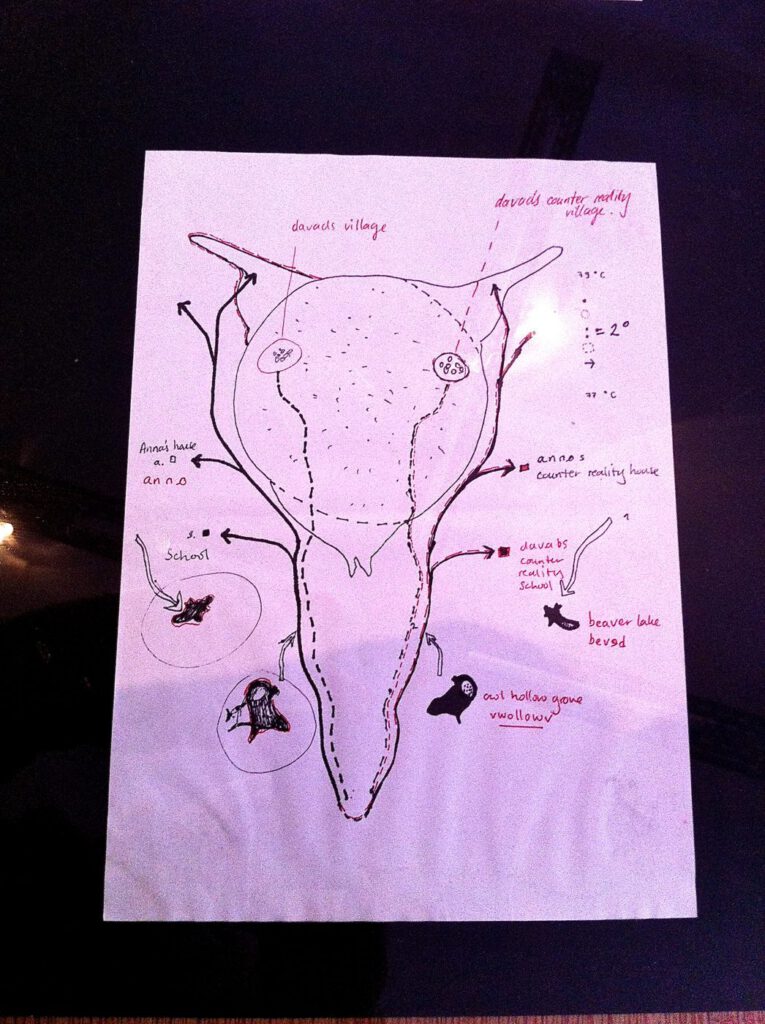
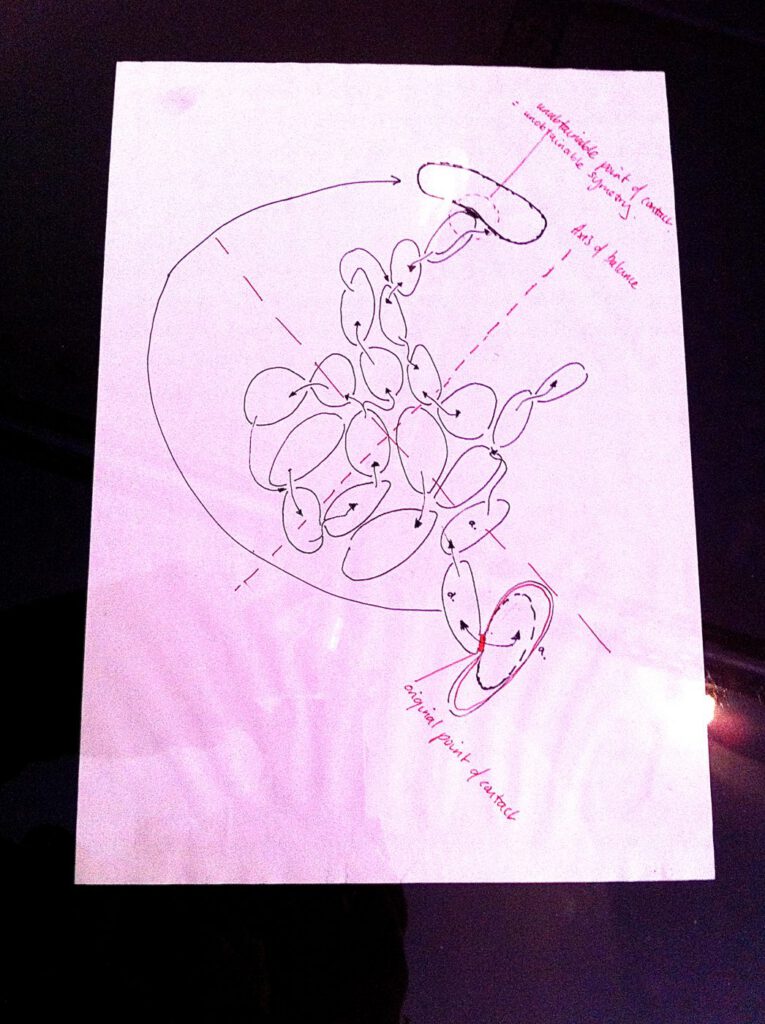
The artifacts
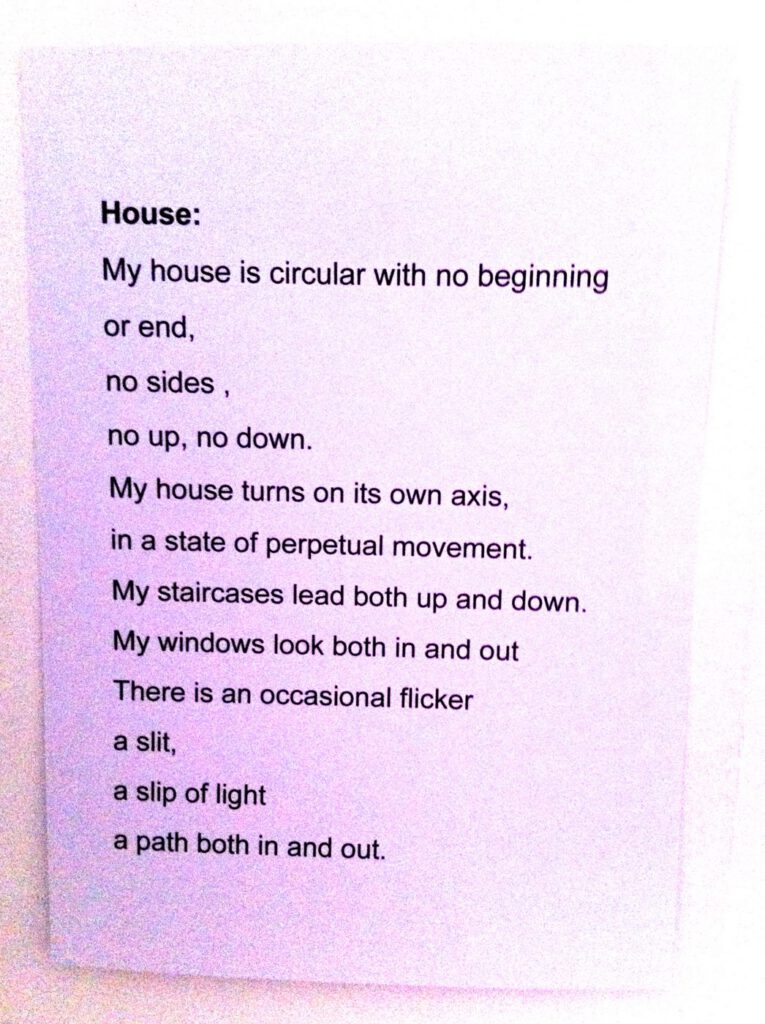
Sound Hole
A performance on intimacy and transience, opening as a news bulletin: “Breaking news live from Tallinn”.
There’ve been reports coming in of a strange phenomenon that until now remains unexplained. At different locations around the world pockets of dead sound are surfacing. These are spherical areas of around two square metres where, once you step over the threshold, there is no sound. They’ve become commonly known as sound holes. People are stepping accidentally into these sound ellipses to find themselves shocked by the absolute silence. Scientists are finding it hard to explain these phenomena. The only real facts that have come to light are that they seem to be occurring in what are usually noisy locations like hotel lobbies, cafés and airport transit lounges.
The anchor
 Play video: Sound Hole (loads from YouTube)
Trading Places, Leaving Traces
Made for Channel II, an event by dominokingdom in Brussels: a “knock-on” performance that answers a piece by Zhana Evanova, A Man Who Is Not Regular in His Habits Won’t Amount to Anything, in which Robin Amanda performed.
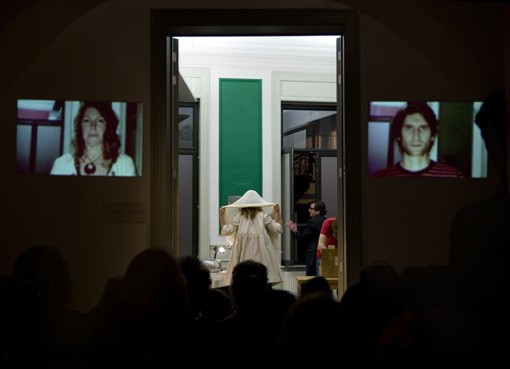
Performing in Zhana’s work was really enjoyable; the ritual repetition felt like a form of group meditation. There was a marked contrast between the feeling of being part of the group, in rehearsals and in the construction of the piece, and the sense of fragmentation and abstraction we were illustrating through the performance. I enjoyed this feeling of contrast between being part of a group and alone.
I was fascinated by the video the performance was based on and the construction of the performance itself, a kind of puzzle where the pieces don’t touch. At the time I was researching statistics on suicide and happiness and another constant theme for me, the breakdown of community.
For me Zhana’s performance represented a sense of alienation and separateness that is symptomatic of the fragmented society we live in. It also touches on a sense of the traces, the wake left behind by different people’s trajectories through the same space. The experience as a whole made me want to find a way to relate to the piece through my own medium, video.
Robin Amanda on how the work came about
Performers Daniel Osrozski, Scott Hamilton, Michiel Reynaert, Jan Daniel, Oriane Varak, Anna Rispoli and Manuel von Rahden. With thanks to Hans Sonneveld.
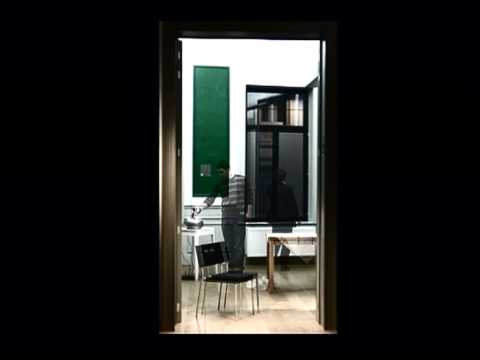 Play video: Trading Places, Leaving Traces (loads from YouTube)
Gold
 Play video: Gold (loads from YouTube)
Video
Transnistria
An experiment in immersive cinema, Transnistria is an attempt to create a future world through a visual collage of present-day imagery. Using the suggestion of narration and music, a new reality is stitched together from a set of distinct and separate realities, making a world which is a credible alternative to the old realities from which it came.
Its narrative world alludes to a futuristic vision of mankind after he has been forced to retreat to the equator by extreme climate change. There he builds an elaborate structure which extends into space, where he sleeps attached to the earth by thin umbilical cords. His fall from grace, defined by his loss of ownership of the planet, is accompanied by a repositioning of core values and beliefs. Moving away from hierarchical rationalisation, in Transnistria emotions and the subconscious are the enshrined leaders.
Positioned in the margin between opposites, it is a world of sustained paradox: hot and cold, restriction and space, freedom and containment, attachment and disembodiment, sealed and split, construction and deconstruction. Visual memory is embedded in the moment of remembering. Reality is the way in which we interpret the information that comes our way, translated through this veil of memories. But what about the information that gets away, that slips through the gaps, falls through the synaptic slit, directly into the lap of the subconscious? Transnistria plays with this invisible zone. This isn’t a world built on rationalisation but out of a desire to construct realities that come directly from the subconscious and speak directly back to it.
 Play video: Transnistria (loads from YouTube)
Credits Concept, writing, direction, camera and voice: Robin Amanda Creswell Faure. Music: Jake Hitchcock of Talula Music. Performer and collaborator: Caroline Daish. Space images: ESA. Co-production: Azteca Media.
Darwin’s Solution
Darwin’s Solution is set in a future where avian flu has wiped out the Earth’s population. Through a mixture of news footage and computer-game scenarios it tells the story of a boy’s entry into the outside world on his eighteenth birthday: an extreme change after having grown up in a virtual universe in total isolation.
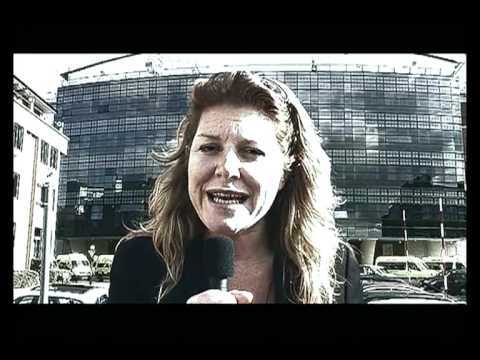 Play video: Darwin’s Solution (loads from YouTube)
Dual
 Play video: Dual (loads from YouTube)
Texts
Adult Fairy Tales for the End of the World, a cycle of five stories:
- The Bar at the End of the World
- Falling Down
- Flying Is for Angels
- M.E.M.O. (Mass Extinction Memorial Observatory)
- State of the Art Heart
Grid Wave Relativity, a performance script.